12457 SW Community Blvd., Port St. Lucie, FL 34987


Deciding whether and when to spay or neuter your pet is one of the most important health decisions you will make as a pet owner. It can directly affect your companion’s lifespan, behavior, and long-term well-being. Many pet owners feel uncertain about the procedure, the timing, or what recovery will look like. The good news is that spaying and neutering are among the most commonly performed and well-understood veterinary procedures available today. Whether you have a puppy, kitten, or an adult rescue, finding a trusted spay-neuter vet is the first step toward giving your pet a longer, healthier life. This article walks you through everything you need to know, from the differences between the two procedures to practical recovery tips your pet will thank you for.
What Is the Difference Between Spaying and Neutering?
Spaying and neutering are both surgical procedures that prevent pets from reproducing, but they apply to different sexes and involve different techniques.
Spaying refers to the removal of a female animal’s reproductive organs, typically the ovaries and uterus. This procedure is performed under general anesthesia and requires a small abdominal incision. In many cases, veterinarians now use minimally invasive laparoscopic techniques that reduce recovery time and postoperative discomfort.
Neutering refers to the removal of a male animal’s testicles. It is generally a simpler and shorter procedure than spaying, also performed under general anesthesia. Because it is less invasive, male pets often recover faster than females.
Both procedures eliminate the ability to reproduce. Both also trigger significant hormonal changes that carry a range of health and behavioral benefits that go well beyond population control.
The Health and Behavioral Benefits of Spaying and Neutering
The pet spay surgery benefits extend far beyond preventing unwanted litters. For female pets, spaying before the first heat cycle dramatically reduces the risk of mammary tumors, which are malignant in roughly 50 percent of dogs and 90 percent of cats. Spaying also eliminates the risk of pyometra, a life-threatening uterine infection that is unfortunately common in intact females.
For male pets, neutering removes the risk of testicular cancer and significantly lowers the likelihood of prostate problems as they age. Behaviorally, neutered males tend to be calmer. They are less likely to roam in search of mates, which reduces the risk of traffic injuries and fights with other animals. Urine marking and mounting behaviors are also reduced substantially in most cases.
From a broader health standpoint, the pet spay surgery benefits include a reduced risk of hormone-driven conditions that can shorten your pet’s life. According to the American Veterinary Medical Association (AVMA), spayed and neutered pets often live longer, healthier lives than their intact counterparts.
At Live with Grace Animal Hospital, we see firsthand how these procedures positively transform a pet’s quality of life, and we take the time to walk every owner through the full picture before proceeding.
When Is the Right Time? Timing by Species and Breed
One of the most common questions veterinarians receive is: when to neuter your dog or spay your cat? The answer depends on species, breed, size, and individual health status.
General timing guidelines:
- Dogs (small to medium breeds): Spay or neuter between 6 and 12 months of age
- Dogs (large to giant breeds): Many veterinarians now recommend waiting until 12 to 18 months to allow for full musculoskeletal development before altering hormone levels
- Cats: Spaying or neutering is generally recommended at around 5 months of age, before the first heat cycle in females
- Rabbits and other small animals: Timing varies. Speak with your vet for guidance specific to your pet’s species
When to neuter your dog should always be a conversation with your veterinarian, not a decision based on general rules alone. Factors like existing health conditions, weight, and behavioral history all play a role. In Port St. Lucie, FL, where pets spend a great deal of time outdoors year-round, an intact roaming dog is at significantly higher risk of injury, exposure to disease, and unplanned breeding. Early timing protects your pet and the broader community.
A common misconception is that females should go through at least one heat cycle before being spayed. Current veterinary research does not support this belief. In fact, spaying before the first heat provides the greatest reduction in mammary tumor risk.
What to Expect on the Day of Surgery
Knowing what happens on surgery day helps reduce anxiety for both pet owners and their companions. Here is a step-by-step look at the process at our vet clinic in Port St. Lucie:
- Pre-surgical consultation: Your vet reviews your pet’s health history, confirms vaccinations are current, and may recommend pre-anesthetic bloodwork for older pets.
- Fasting instructions: Most pets are asked to fast from the night before surgery to reduce anesthesia risks.
- Check-in: You arrive at the clinic, sign consent forms, and hand off your pet to the care team.
- Anesthesia and monitoring: Your pet is placed under general anesthesia and monitored continuously for heart rate, oxygen levels, and body temperature throughout the procedure.
- Surgery: The procedure typically takes between 15 and 45 minutes, depending on the type and your pet’s size.
- Recovery room: Your pet wakes up in a quiet, supervised recovery area.
- Discharge: Most pets go home the same day. You receive detailed post-operative care instructions before leaving.
Spay Recovery Tips and What the Healing Process Looks Like
Recovery is the phase that worries most pet owners, and understandably so. The good news is that with proper at-home care, most pets bounce back quickly and comfortably.
For the first 24 to 48 hours, expect your pet to be groggy, quiet, and possibly reluctant to eat. This is a normal response to anesthesia. Offer water and a small amount of food, and give them a calm, comfortable space to rest away from children and other pets.
Key spay recovery tips to follow at home:
- Keep the incision site dry for at least 10 to 14 days. No baths, swimming, or outdoor puddle play.
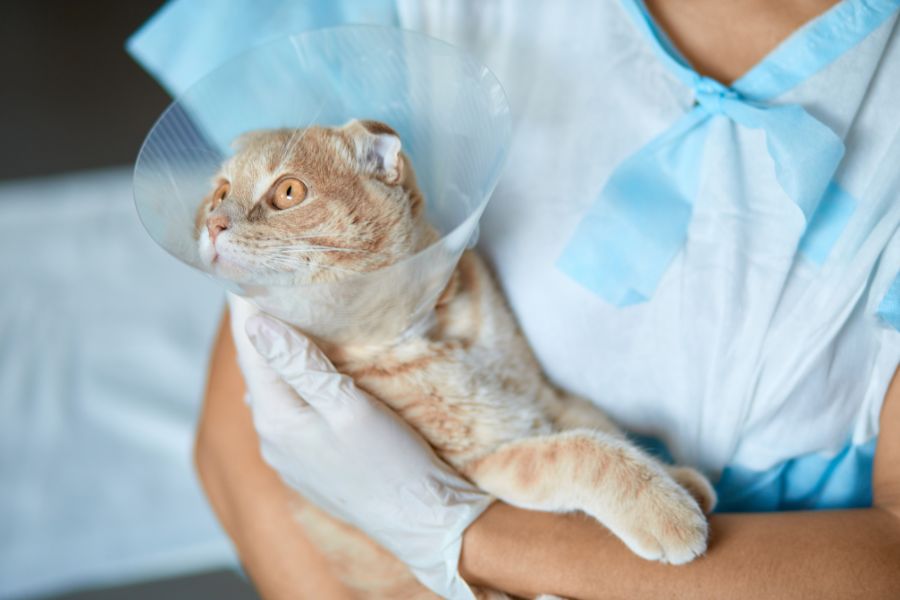
- Use the E-collar (cone) as directed. Even pets who seem calm can lick or chew the incision when unsupervised.
- Restrict activity. No running, jumping, or rough play for 10 to 14 days. Short leash walks for bathroom breaks only.
- Check the incision daily for signs of redness, swelling, discharge, or opening.
- Attend the follow-up appointment to confirm proper healing before returning to normal activity.
Cat neuter healing time is typically the fastest of all, with most male cats returning to normal behavior within 2 to 3 days. Female cats and dogs generally need the full 10 to 14 days. Large-breed dogs may need slightly longer.
If your pet seems to be in significant pain, stops eating entirely, or you notice changes at the incision site, contact your veterinarian promptly. Cat neuter healing time and dog spay healing timelines are predictable when aftercare instructions are followed carefully, so any significant deviation from expected progress is worth a call.
Conclusion
Spaying or neutering your pet is one of the most responsible choices you can make for their health and happiness. It reduces disease risk, improves behavior, and contributes to a longer life. The procedure is safe, the recovery is manageable, and the long-term benefits are well established. Whether you are welcoming a new puppy in Port St. Lucie or finally getting around to scheduling a procedure for an adult pet, now is a great time to take action. Connect with your spay-neuter vet to discuss your pet’s specific age, breed, and health status before scheduling. The team at Live with Grace Animal Hospital is here to answer every question and support your pet through every step of the process. Book an appointment today.
Frequently Asked Questions
Q: What is the difference between spaying and neutering?
Ans: Spaying is the surgical removal of a female pet’s ovaries and uterus, while neutering is the removal of a male pet’s testicles. Both are performed under general anesthesia. Spaying is a slightly more involved abdominal surgery, while neutering is generally simpler and carries a shorter recovery time.
Q: At what age should I spay or neuter my dog?
Ans: For small and medium breeds, spaying or neutering between 6 and 12 months is common. For large and giant breeds, many vets recommend waiting until 12 to 18 months. Your veterinarian will recommend the best timing based on your dog’s breed, size, and health history.
Q: Will spaying or neutering change my pet’s personality?
Ans: These procedures may reduce hormone-driven behaviors such as roaming, urine marking, mounting, and aggression, but your pet’s core personality will remain the same. Most owners report that their pets become calmer and easier to manage after the procedure.
Q: How long does recovery take after spaying or neutering?
Ans: Male cats typically recover within 2 to 3 days. Female cats and most dogs generally need 10 to 14 days of restricted activity for full incision healing. Larger breed dogs may take slightly longer. Always follow your vet’s specific aftercare instructions.
Q: Is it safe to spay or neuter an older pet?
Ans: Yes, older pets can be safely spayed or neutered, though pre-surgical bloodwork is often recommended to assess organ function before anesthesia. Speak with your veterinarian to evaluate your pet’s individual health status and discuss whether the benefits outweigh any added risk.