12457 SW Community Blvd., Port St. Lucie, FL 34987

Your dog used to race you to the door. Now he hesitates on the stairs. She used to leap onto the couch without thinking. Now she circles it twice before giving up. These small changes can be heartbreaking to watch, but they are not always permanent. Canine rehabilitation therapy is a growing field of veterinary medicine that helps dogs rebuild strength, recover from injury, and move through life with less pain. Whether your dog is bouncing back from surgery, managing a chronic condition, or simply slowing down with age, rehabilitation may be exactly what he needs. This article explains what canine rehabilitation involves, which dogs benefit most, and what a typical program looks like so you can make a confident, informed decision for your pet.
What Is Canine Rehabilitation Therapy?
Canine rehabilitation therapy is the veterinary equivalent of physical therapy for people. It uses targeted exercises, manual techniques, and therapeutic equipment to restore function, reduce pain, and improve a dog’s overall quality of movement. Just as a human athlete works with a physical therapist after a knee injury, dogs recovering from orthopedic surgery or managing degenerative conditions benefit from structured, progressive rehabilitation programs designed around their specific needs.
One of the most common things we see in practice is dogs that were discharged after orthopedic surgery with no structured recovery plan. Without guided rehabilitation, compensatory movement patterns develop, meaning the dog begins overloading healthy joints to protect the painful one, which creates new problems down the road. Structured rehabilitation prevents this cycle before it starts.
Rehabilitation is not exclusively for injured dogs. It also benefits healthy senior dogs whose muscle mass has declined with age, overweight dogs building toward a healthier fitness level, and working dogs maintaining peak performance.
Signs Your Dog May Need Rehabilitation
Some dogs need rehabilitation after a clear medical event, like surgery or a fracture. Others show gradual signs that are easy to miss or dismiss as normal aging. Watch for these indicators:
- Limping or favoring one leg — even intermittent limping suggests pain or weakness that warrants evaluation.
- Reluctance to climb stairs or jump — hesitation at heights often signals joint discomfort or reduced rear-end strength.
- Muscle wasting on one side of the body — visible asymmetry in muscle mass points to a limb being underused due to pain.
- Stiffness after rest — a dog who wakes up stiff but loosens up with movement may have early joint disease.
- Changes in posture or gait — a tucked rear end, a shortened stride, or a swaying walk can all indicate compensation patterns.
- Decreased activity or play interest — dogs rarely vocalize pain. Withdrawal from activity is often the first signal.
If you notice any of these signs, contact your veterinarian promptly. Early intervention consistently produces better outcomes than waiting until symptoms are severe.
Which Dogs Benefit Most From Rehabilitation
Almost any dog can benefit from a well-designed rehabilitation program, but certain groups see the most significant improvements.
Post-surgical patients are among the clearest candidates. Dogs recovering from tibial plateau leveling osteotomy (TPLO), femoral head and neck ostectomy (FHO), or spinal surgery need guided recovery to rebuild strength and restore normal movement patterns. Dog physical therapy vet care in the weeks following surgery dramatically reduces the risk of re-injury and shortens overall recovery time.
Dogs with osteoarthritis benefit enormously from rehabilitation. Arthritis is one of the most common conditions in dogs, affecting an estimated one in five dogs over the age of one. Movement, when done correctly and progressively, actually helps arthritic dogs. It maintains joint fluid circulation, builds supportive muscle, and reduces stiffness. Senior dog joint pain relief through rehabilitation often reduces reliance on pain medication over time.
Neurological patients recovering from intervertebral disc disease (IVDD) or other spinal conditions use rehabilitation to retrain the nervous system alongside the musculoskeletal system. These cases require careful, specialized protocols but show remarkable recovery potential with consistent care.
Overweight dogs are another strong candidate group. Excess weight accelerates joint deterioration and makes exercise painful, creating a cycle that is difficult to break without guidance. Hydrotherapy is especially valuable here because it allows full-body movement with minimal joint impact, helping the dog build fitness before land-based exercise becomes comfortable.
Senior dogs benefit even without a specific injury or diagnosis. Age-related muscle loss, called sarcopenia, reduces stability and increases fall risk. A rehabilitation program focused on strength and balance can meaningfully improve a senior dog’s mobility and confidence in daily life.
What to Expect During Canine Rehabilitation Therapy
If you bring your dog to Live with Grace Animal Hospital, the rehabilitation process begins with a thorough evaluation. Here is what a typical program looks like:
- Initial assessment — a veterinarian evaluates gait, muscle mass, range of motion, neurological reflexes, and pain response.
- Individualized treatment plan — based on the assessment, a customized program is developed with specific goals and milestones.
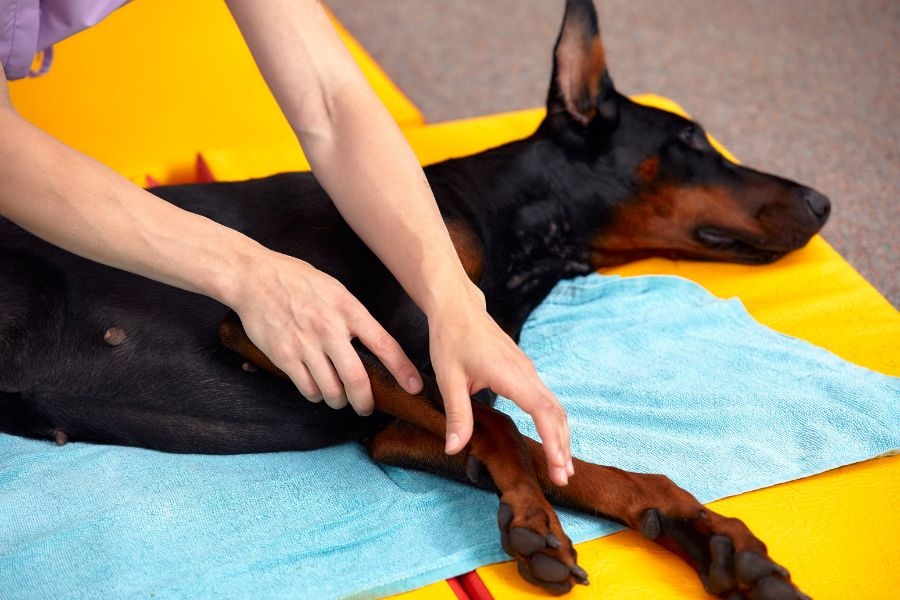
- Hands-on therapy sessions — sessions may include therapeutic laser, manual therapy, targeted strengthening exercises, and underwater treadmill work, depending on your dog’s needs.
- Home exercise program — most dogs receive guided exercises to practice between visits, which accelerates progress significantly.
- Progress reassessment — the plan is updated regularly based on how your dog is responding, ensuring the program evolves with his recovery.
Dog physical therapy in Port St. Lucie is delivered in a calm, supportive environment designed to keep dogs comfortable and cooperative throughout treatment.
Managing Post-Surgery Dog Recovery and Long-Term Conditions
Post-surgery dog recovery is one of the most common reasons dogs begin rehabilitation, and the timing matters. The goal in the early recovery phase is controlled movement, not rest. Controlled, guided movement promotes healthy tissue healing, prevents muscle atrophy, and maintains joint health during the weeks when normal activity is restricted.
For dogs managing long-term conditions like hip dysplasia or chronic arthritis, rehabilitation is not a one-time intervention. It is an ongoing component of care. In Port St. Lucie, Florida’s warm, humid climate can actually be an advantage. Dogs are more comfortable moving in warm weather, and hydrotherapy pools can be used year-round, making consistent rehabilitation accessible across all seasons.
Dog mobility problems treatment requires patience, but the results are real. Many dogs who once struggled to rise from the floor are walking confidently after completing structured programs. The key is consistent, progressive work under professional guidance, combined with home care between sessions.
A common misconception is that rest is always the right prescription for a limping dog. In reality, prolonged rest without guided movement often leads to muscle loss, joint stiffness, and longer recovery. The goal is not to immobilize the dog; it is to move him in ways that heal rather than harm.
Conclusion
Canine rehabilitation therapy is one of the most effective tools available for helping dogs move better, feel better, and live fuller lives. Whether your dog is recovering from surgery, managing senior dog joint pain relief, dealing with a neurological condition, or simply moving less freely than he used to, a structured rehabilitation program can make a genuine difference. The earlier you begin, the better the outcomes tend to be. If your dog has been showing signs of pain, stiffness, or reduced mobility, do not wait to seek an evaluation. The vet team at Live with Grace Animal Hospital is here to guide your dog through every step of his recovery and long-term wellness. Book an appointment today.
Frequently Asked Questions
Q: What conditions does canine rehabilitation therapy treat?
Ans: Canine rehabilitation therapy treats a wide range of conditions, including post-surgical recovery, osteoarthritis, hip and elbow dysplasia, intervertebral disc disease, neurological injuries, muscle loss in senior dogs, and obesity-related mobility issues. It is also used for healthy athletic dogs to improve performance and prevent injury.
Q: How do I know if my dog needs rehabilitation?
Ans: Signs that your dog may benefit from rehabilitation include limping, reluctance to climb stairs or jump, visible muscle loss on one side, stiffness after rest, changes in posture or gait, and decreased interest in activity. If you notice any of these signs, a veterinary evaluation is the right first step.
Q: How long does a typical rehabilitation program last?
Ans: Program length varies based on the dog’s condition and goals. Post-surgical recovery programs typically run six to twelve weeks with regular sessions. Dogs managing chronic conditions like arthritis may continue with maintenance sessions on an ongoing basis. Your veterinarian will set a timeline based on your dog’s specific progress.
Q: Is canine rehabilitation safe for older dogs?
Ans: Yes. Rehabilitation is often particularly beneficial for senior dogs. Programs for older dogs focus on gentle strengthening, balance training, and pain management rather than high-intensity exercise. Techniques are always adapted to the dog’s age, fitness level, and any existing health conditions.
Q: Can I do rehabilitation exercises with my dog at home?
Ans: Home exercises are a valuable part of most rehabilitation programs and your care team will teach you exactly what to do. However, home exercises should always be prescribed and demonstrated by a rehabilitation professional. Performing the wrong exercises or using incorrect technique can slow recovery or cause further injury.