12457 SW Community Blvd., Port St. Lucie, FL 34987


Your dog threw up once, and now he is curled in his bed, barely lifting his head. You are watching him, wondering if this will pass on its own or if something is seriously wrong. Most pet owners face this exact moment at least once, and the uncertainty is hard. A dog vomiting and lethargic at the same time is not something to brush off. While a single episode can sometimes be minor, the combination of both symptoms together often signals that your dog’s body is under real stress. This article walks you through what to watch for, what different symptoms mean, and exactly when your dog needs to see a veterinarian without delay.
What It Really Means When Your Dog Is Both Vomiting and Tired
Vomiting alone is not always cause for alarm. Dogs occasionally eat something disagreeable and bounce back within hours. But lethargy changes the picture entirely. When a dog is both vomiting and lethargic, it typically means the body is responding to something significant: an infection, a toxin, an obstruction, or an underlying condition that is progressing.
Lethargy is one of the most consistent early indicators that something is wrong internally. A tired dog who also cannot keep food or water down is losing fluids rapidly. Dehydration can set in faster than most owners expect, and in young, senior, or small-breed dogs, the window is even narrower.
Estimates suggest that gastrointestinal issues are among the most common reasons dogs visit the veterinarian, accounting for a significant portion of urgent care visits each year. Many of those cases started with an owner noticing their dog throwing up warning signs alongside unusual stillness or weakness. Early recognition makes a meaningful difference in how quickly and smoothly a dog recovers.
Warning Signs That Tell You This Is Not Just an Upset Stomach
Not all vomiting episodes are equal. The signs below indicate that what your dog is experiencing goes beyond a passing stomach upset. If you observe any of these, contact your veterinarian promptly.
- Blood in the vomit or stool. Even small streaks of red or dark, coffee-ground material are significant and need immediate evaluation.
- Vomiting more than twice in a short window. Repeated episodes back to back suggest the body is not self-correcting.
- Complete refusal to eat or drink. A sick dog not eating for more than 24 hours is a clear signal that something deeper is going on.
- Distended or visibly bloated abdomen. Abdominal bloating paired with restlessness can indicate a life-threatening condition called GDV (gastric dilatation-volvulus), particularly in large or deep-chested breeds.
- Pale, white, or bluish gums. Gum color is a window into circulation. Anything other than a healthy pink warrants immediate veterinary attention.
- Collapse or inability to stand. If your dog cannot hold himself upright, this is a genuine medical situation requiring same-day veterinary care.
Dr. Kelly Rew, Practice Owner and Medical Director at Live with Grace Animal Hospital, puts it plainly: “When owners tell me their dog has been vomiting and is also just not themselves, I always want to see that dog. Lethargy is the body’s way of redirecting energy toward something it’s trying to fight. That combination rarely resolves on its own without us understanding what’s driving it.”
When to Take Your Dog to the Vet
This is the question every pet owner wants answered directly.
See your vet the same day if your dog:
- Has vomited more than twice within a few hours
- Is lethargic and completely uninterested in water
- Has dog stomach problems symptoms that include diarrhea alongside the vomiting
- Is a puppy, a senior dog, or has a known health condition
- Has potentially swallowed a foreign object, medication, or household chemical
- Shows any sign of pain when you touch the abdomen
Monitor at home only if:
- Your dog vomited once and is acting normally within one to two hours
- Energy, interest in water, and gum color are all normal
- There is no blood, no bloating, and no repeated vomiting
When to take dog to vet is not always a dramatic decision. Sometimes it is simply the responsible one. If your gut says something is off, trust it. Pet owners who know their dogs well are often right.
What the Vet Will Look For
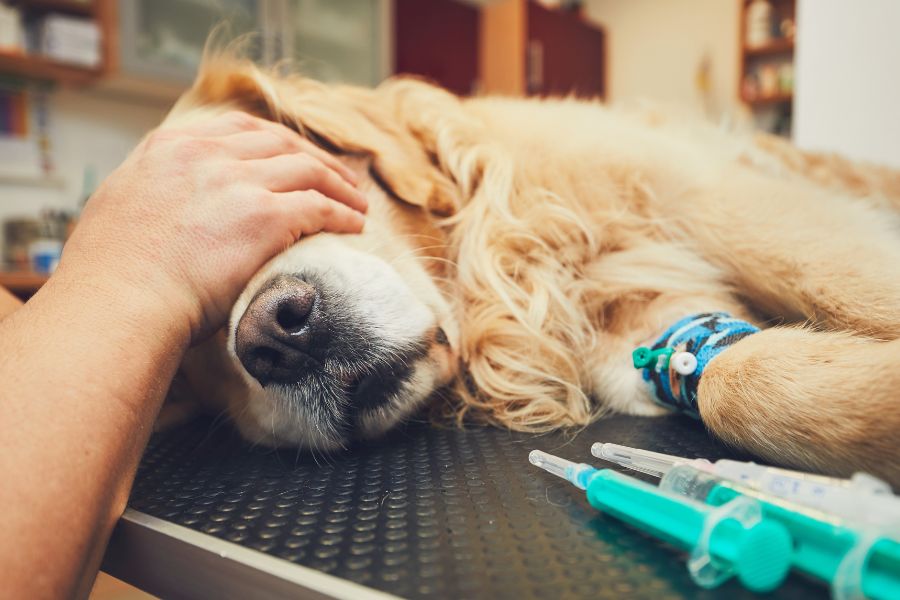
When you bring in a dog vomiting and lethargic, your veterinarian is working through a checklist of possibilities from the moment they walk into the room. They will assess your dog’s hydration status, check gum color and capillary refill time, palpate the abdomen for pain or abnormal mass, and evaluate overall responsiveness.
From there, the clinical picture guides what comes next. Dog diagnostic care at this stage often includes bloodwork to assess organ function and check for infection or anemia, urinalysis, and in many cases, abdominal X-rays or ultrasound to rule out obstruction, foreign body, or internal abnormalities.
In Port St. Lucie, where warm, humid conditions throughout the year can increase exposure to certain parasites, toxins from plants, and heat-related illness, these diagnostics carry extra importance. Dogs who spend time outdoors in Florida’s climate are regularly exposed to potential hazards that a careful owner might not immediately recognize as the source of a dog’s sudden illness.
The findings from diagnostics drive the treatment plan. Intravenous fluids to correct dehydration, anti-nausea medication, and supportive care are common starting points. More specific treatment follows once the underlying cause is identified.
Common Causes Your Vet Will Rule Out
Understanding what might be driving your dog’s symptoms helps you have a more informed conversation with your veterinarian. The most frequent causes of dog stomach problems symptoms combined with lethargy include:
Dietary indiscretion: Dogs eat things they should not. Garbage, grass, table scraps, or foreign material can trigger acute vomiting. This is often the least serious cause, but it still warrants monitoring.
Intestinal obstruction: A swallowed toy, bone fragment, or piece of clothing can block the digestive tract. This is a surgical situation and one of the most urgent causes of the combination of dog throwing up warning signs and sudden lethargy.
Parvovirus: Particularly dangerous in unvaccinated or incompletely vaccinated puppies, parvo causes severe vomiting, bloody diarrhea, and rapid lethargy. It requires immediate hospitalization.
Pancreatitis: Inflammation of the pancreas, often triggered by a high-fat meal, causes significant abdominal pain, vomiting, and reluctance to move. It can range from mild to severe.
Kidney or liver disease: Organ dysfunction causes toxins to build up in the bloodstream, triggering nausea and profound fatigue. A sick dog not eating alongside these symptoms is a consistent pattern.
Toxin ingestion: Xylitol (found in sugar-free gum and some peanut butter), grapes, raisins, certain mushrooms, and many common household plants are poisonous to dogs. If ingestion is suspected, contact your vet immediately.
A dog who is vomiting and lethargic due to toxin exposure needs care without delay. Timing is critical in those cases.
How to Support Your Dog While You Wait for the Appointment
If you have determined that your dog’s condition warrants a vet visit but you are waiting for the appointment, these steps will help keep your dog as comfortable and stable as possible.
- Remove food for two to four hours to let the stomach settle, but offer small sips of water every 15 to 20 minutes to help prevent dehydration.
- Keep your dog in a cool, quiet space away from heat and activity.
- Note the timeline: when vomiting started, how many episodes, what the vomit looked like, and whether your dog had access to anything unusual.
- Check gum color every 30 minutes. Press a finger gently to the gum, release, and watch for the pink color to return within two seconds. Slow return is a concern.
- Do not give human medications, including antacids or anti-nausea drugs. These can be toxic to dogs or mask symptoms your vet needs to assess.
- Keep your dog calm. Stress increases nausea and can worsen lethargy.
Bring your notes to the appointment. The more clearly you can describe the timeline and symptoms, the faster your vet can narrow down what is happening.
Conclusion
A dog vomiting and being lethargic is a combination that deserves your full attention. While occasional mild vomiting can be normal, persistent symptoms paired with low energy are your dog’s clearest way of telling you something is wrong. Knowing when to act fast and what information to bring to your vet gives your dog the best possible chance at a fast, full recovery. The team at Live with Grace Animal Hospital is here to help you navigate exactly these moments, with same-day appointments available for pets new and established. Book an appointment today.
Frequently Asked Questions
Q: My dog vomited once and seems a little tired. Should I be worried?
Ans: A single vomiting episode followed by mild tiredness is not always cause for concern, especially if your dog’s gum color is normal, he is drinking water, and he perks up within a couple of hours. However, if lethargy continues past a few hours or any additional symptoms develop, contact your veterinarian the same day.
Q: Can a dog recover from vomiting and lethargy at home without a vet visit?
Ans: Very mild cases caused by dietary indiscretion may resolve with brief fasting and small amounts of water. However, if your dog has vomited more than twice, is refusing water, shows any blood, or does not improve within a few hours, home management is not enough. A veterinary exam is needed to rule out serious underlying causes.
Q: What are the most dangerous reasons a dog might vomit and become lethargic?
Ans: The most serious causes include intestinal obstruction from a swallowed foreign object, parvovirus in unvaccinated dogs, toxin ingestion, pancreatitis, organ failure, and gastric dilatation-volvulus in large breeds. Each of these requires prompt veterinary diagnosis and treatment.
Q: How can I tell if my dog is dehydrated from vomiting?
Ans: Gently pinch the skin at the back of your dog’s neck and release it. In a well-hydrated dog, the skin springs back immediately. Slow return, or skin that stays tented, indicates dehydration. Dry gums, sunken eyes, and a dog that is too weak to stand are more advanced signs. Bring your dog to the vet without delay if any of these are present.
Q: Is it safe to give my dog human anti-nausea medication at home?
Ans: No. Many human medications are toxic to dogs, and even those that are not toxic can mask symptoms your veterinarian needs to see. Never give your dog any medication, including over-the-counter products, without first consulting your vet. If your dog is vomiting and lethargic, the appropriate step is a veterinary evaluation, not home medication.