12457 SW Community Blvd., Port St. Lucie, FL 34987


Your dog splashes into a pond, gulps a mouthful of water, and seems fine. An hour later, she is stumbling and drooling. This is how blue-green algae poisoning dogs often begins, and it can turn serious within minutes. These algae blooms release toxins strong enough to cause organ failure or death in otherwise healthy pets. Warm, still water bodies across Florida are especially prone to blooms during summer months. Knowing what to watch for and how to react can make the difference between a scare and a tragedy. This article covers what these algae are, the warning signs, why blooms form, how veterinarians treat exposure, and simple steps to keep your dog safe near lakes, ponds, and canals.
Understanding Blue-Green Algae
Blue-green algae, technically called cyanobacteria, are microscopic organisms that grow in freshwater lakes, ponds, and slow-moving canals. They are not true algae, but they behave similarly and can multiply rapidly under the right conditions. When a bloom forms, the water often looks like spilled paint, with a green, blue, or reddish tint and a thick, scummy texture.
Some blooms produce toxins that affect the liver or nervous system, while others are harmless to look at but still dangerous if swallowed. There is no way to tell a toxic bloom from a safe one just by looking at it. Toxic algae exposure is considered rare compared to other causes of pet poisoning, but veterinarians widely agree it carries one of the highest fatality rates once symptoms appear.
Signs and Symptoms to Watch For
Dog algae poisoning symptoms can appear within 15 to 60 minutes of exposure, and sometimes even faster with concentrated blooms. Watch for these signs after any contact with untreated pond, lake, or canal water:
- Vomiting or diarrhea that starts suddenly after swimming or drinking from standing water
- Excessive drooling paired with disorientation or wobbly movement
- Difficulty breathing or rapid, labored breaths
- Seizures or muscle tremors, which suggest the toxin has reached the nervous system
- Yellowing of the gums or eyes, a sign the liver is struggling to process the toxin
If you notice any of these signs, contact your nearest veterinarian promptly. In our experience, the dogs with the best outcomes are the ones brought in within the first hour of symptoms starting, so time matters more than almost anything else here.
Causes and Risk Factors
Blue-green algae blooms thrive in warm water with high nutrient levels, often from fertilizer runoff or slow water flow. Florida’s heat and humidity create ideal bloom conditions from late spring through early fall, and any dog algae poisoning symptoms tend to spike alongside these seasonal blooms. Stagnant retention ponds, canals, and shallow lake edges are the highest-risk locations because water movement is minimal and sunlight exposure is constant.
Dogs are at higher risk than most other pets because they swim, wade, and drink directly from these water sources, and many will lick algae off their fur afterward. Breed and age do not appear to change susceptibility much. Any dog that swims in or drinks from an affected water source is at risk, regardless of size or breed. Younger dogs may simply be more likely to explore murky water without hesitation, which increases their odds of exposure.
How It’s Diagnosed and Treated
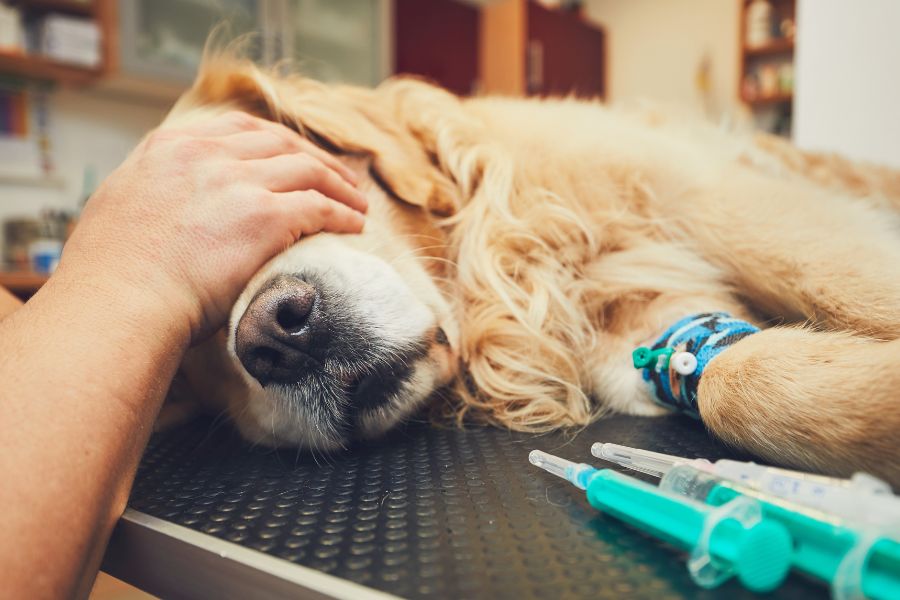
There is no single blood test that instantly confirms blue-green algae poisoning dogs experience, so diagnosis relies heavily on a detailed history combined with physical exam findings. Your veterinarian will ask about recent water exposure, then run bloodwork to check liver function and rule out other causes.
Treatment typically follows these steps:
- Decontamination to remove any algae still on the skin or coat, since dogs continue absorbing toxin if it is licked off later
- Inducing vomiting if exposure was very recent and the dog is stable enough for it
- IV fluids to support the kidneys and help flush the toxin from the bloodstream
- Liver-protective medications and supportive care, often including activated charcoal to bind remaining toxin in the gut
- Close monitoring of breathing, heart rate, and neurological status for at least 24 to 48 hours
Many dogs we see for suspected algae exposure improve significantly with fast, aggressive supportive care, though the first few hours after ingestion are the most critical window for a good outcome.
Prevention and Home Care Tips
Toxic algae dog safety starts well before your dog ever reaches the water’s edge. A common misconception is that clear-looking water is automatically safe. In reality, some toxin-producing blooms are barely visible, especially early in their growth cycle.
- Check local health advisories before letting your dog swim in lakes, ponds, or canals
- Keep dogs leashed near unfamiliar water, especially retention ponds and slow canals common throughout Port St. Lucie neighborhoods
- Rinse your dog thoroughly with clean water immediately after any swim in natural water
- Never let your dog drink from standing water, and bring fresh water on walks instead
- Watch for algae bloom warning signs like discolored, scummy, or foul-smelling water, and avoid those areas entirely
The team at Live with Grace Animal Hospital reminds pet owners that a quick rinse after swimming takes far less time than treating a poisoning case later.
Frequently Asked Questions
Blue-green algae poisoning in dogs is a serious but often preventable emergency. The fastest-acting cases involve neurological symptoms within an hour of exposure, while liver damage can take a day or more to fully show. Recognizing the early dog algae poisoning symptoms, understanding when a water source poses risk, and rinsing your dog after any swim are simple habits that protect your pet all season long. If your dog has recently been in untreated pond, lake, or canal water and is showing vomiting, drooling, tremors, or disorientation, do not wait to see if symptoms pass on their own. Live with Grace Animal Hospital is here to help you respond quickly if the unexpected happens. Book an appointment today.
Frequently Asked Questions
Q: What are the symptoms of blue-green algae poisoning in dogs?
Ans: Common signs include sudden vomiting, excessive drooling, disorientation, muscle tremors, and difficulty breathing, usually appearing within an hour of exposure. Yellowing of the gums or eyes can also signal liver involvement.
Q: How long after swimming would a dog show algae poisoning signs?
Ans: Symptoms often appear within 15 to 60 minutes of contact with contaminated water, though some cases develop more gradually over several hours.
Q: Can dogs get sick from algae without drinking the water?
Ans: Yes. Licking algae off their fur or paws after swimming can be enough to cause toxic exposure, even if the dog never directly drank from the water.
Q: How can I tell if a pond has toxic algae?
Ans: There is no reliable way to identify toxic blooms by sight alone, though thick, scummy, discolored water or a strong odor are common warning signs worth avoiding.
Q: What should I do if my dog swam in water with algae?
Ans: Rinse your dog thoroughly with clean water right away and watch closely for vomiting, drooling, tremors, or weakness. Contact your veterinarian immediately if any symptoms develop.